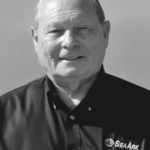
Witt Stephens Jr.* – 2012

“There is no limit to what a person can accomplish if he doesn’t care who gets the credit.”

Witt Stephens, Jr., may not have been the model for this old adage, but he fits its parameters. The Little Rock resident has quietly lent a hand in a myriad of Arkansas outdoor projects, with many of his efforts unknown except to a handful of others associated in the undertaking.

Stephens acquired a keen interest in hunting and fishing as a boy on visits to his father’s family farm at Prattsville in Grant County. He learned about wildlife and he wanted to know more. He is still learning, especially firsthand with his ranch where he puts into practice improvement projects for deer and other wildlife.

He saw that by being selective in hunting, a land manager could use proven conservation practices to make a difference. Let the young deer grow up. Keep the ratio of bucks and does in balance. Wildlife biologists have long preached this lesson, often to deaf ears of non-believers, but Stephens saw what could be accomplished within just a few seasons.

A member of the Arkansas Game and Fish Foundation for years, Stephens served a seven-year term on the Game and Fish Commission from 1993 to 2000. He was only 25 years old when appointed.

He said, “I was too young to be nervous about my age when (Governor) Jim Guy Tucker appointed me. That was a big risk the governor took.”

Two major problems were evident to Stephens and his fellow commissioners at the time. The Game and Fish Commission was in dire financial straits, and the Arkansas deer herd was badly out of balance with its buck-doe ratio. Hunters were taking bucks before they matured.

Stephens was a key figure behind the scenes in the strenuous 1996 campaign to pass a Conservation Sales Tax. “This took a huge group effort,” he said. It passed in November 1996, and the new money began flowing in July 1997. Repairs could be made, vacancies filled and needed projects launched.

The goal was to let the bucks get older and the route chosen was to inaugurate a three-point minimum rule for bucks. “The (AGFC) staff was not enamored with this,” Stephens said, but he had seen it work on his own ranch, and it had been successful many other places.

The rule went into effect in the 1998 hunting season, and in just a few years, hunters saw the results. By passing up spike and forkhorn deer, they were seeing better antlered bucks. More importantly, doubters of the three-point rule joined the bandwagon of quality deer management for the state.

The three-point rule was not a cure-all, but it was a vital first step for Stephens and other AGFC leaders.

Today, Witt Stephens’ interest and enthusiasm in the outdoors has not slackened. He is an avid hunter of deer, ducks, dove and turkeys, and he also enjoys fishing.
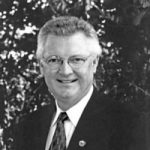

Rick Evans – 2012

Rick Evans has seen major changes in wildlife in his native south Arkansas, and he’s been involved in most of them to some extent.

As a member of a multi-generational timber and lumber family, the changes have been close at hand for him in his Calion surroundings a new miles north of El Dorado.

Deer, always plentiful in south Arkansas, thrived even more under the shift from individual and family owned tracts to the holdings of major timber companies. Use of this land also changed dramatically when widespread leasing to hunting clubs came into practice as a secondary income source for the timber companies.

The deer were numerous, but too much buck-only hunting skewed the buck-doe ratio to the point wildlife biologists were extremely concerned. A major turnaround came in 1998 when Evans and the other members of the Arkansas Game and Fish Commission put in the three-point rule, meaning a buck had to have at least three points on one side of its antlers to be a legal target for hunters.

The theory was to let bucks get more age as a step to overall herd improvement. It worked. Not a cure-all by any means, the three-point rule showed Arkansas hunters that proper management could  improve deer from the overtake of young male animals to more balanced harvests of older males and female.

Evans said, “When I came on board at the Game and Fish Commission in 1994, 90 percent of our deer harvest was bucks and 70 percent of those were a year and a half old. We knew we couldn’t fix the problem all in one year, but we got a start on it.”

Turkeys were declining, he said, in 1994. due to habitat changes, disease and predators. Within a few years and with the aid of favorable weather in nesting seasons, turkey numbers went up sharply, especially in Evans’ south Arkansas. Poor hatches in recent years have dropped the numbers again, with hunting restrictions part of the solution.

In his term as a Game and Fish commissioner, Evans helped ease a sticky problem of houseboats, permanent residences, using public land on the Ouachita River.

Especially satisfying to him was the AGFC acquisition of Grand Prairie, the first land purchase after the Conservation Sales Tax was passed in November 1996. The 4,895-acre tract west of Hope was “cows and bois d’arc (trees)” when bought, Evans said. Today it is a popular hunting, fishing and educational facility that bears his name – Rick Evans Grand Prairie Conservation Education Center and Rick Evans Wildlife Management Area.

Bill Bridgforth – 2012

Bill Bridgforth has been involved in major developments in the Arkansas outdoors before, during and after his seven-year term as an Arkansas Game and Fish commissioner.

He said at the top of the list was the 1996 campaign for the conservational sales tax then with innovations funded by it.

Bridgforth was appointed to the commission in 1994, a time when money was short and conditions getting tighter. But there was hope with the quest for a fractional sales tax. This came about in November 1996 after a vigorous campaign in which Bridgforth, a Pine Bluff attorney, served as financial co-chairman.

When fresh funding began in July 1997, Bridgforth and his fellow commissioners focused on acquiring more land for public use and on education – priorities expressed by Arkansas people before the tax election along with more enforcement.

The land purchases were Grandview first, then Raft Creek and later Choctaw Island. All are now productive and popular wildlife management areas – Rick Evans Grandview WMA, Steve N. Wilson Raft Creek WMA and Freddie Black Choctaw Island WMA.

The need for outdoor education was met with the building of four nature centers — Pine Bluff, Jonesboro, Fort Smith and Little Rock. The first one to be constructed, at Pine Bluff, was named Gov. Mike Huckabee Delta Rivers Nature Center. Bridgforth said, “Gov. Huckabee’s (Arkansas) River trip in October 1996 was a pivotal pointing the sales tax campaign. It was very instrumental in the favorable vote for the tax.”

Bridgforth as a commissioner was closely involved with the creation of the 3-point rule in deer hunting. He said, “There was a lot of opposition to the rule at first, but this changed soon after we passed it.” Now a lot of deer clubs have rules even more restrictive than the 3-point.” Arkansas deer hunters have largely accepted what wildlife managers had been advocating for years – buck deer needed to get more age on them and the ratio of bucks and does needed to be more balanced.

Trout fishing catch and release areas were established on the White and Little Red rivers during Bridgforth’s tenure. Limited permit elk hunting began in 1998, and the elk along the Buffalo River became a year-rout tourist attraction.

Paid duck hunting guides, many from out of state, were removed from public management areas, making these popular spots more available to Arkansas waterfowlers.

Fall turkey hunting was eliminated. It later was reinstated for several years then closed again.

Bridgforth said,” When I was on the commission, we had two primary goals. One was to be conservative where the resource was concerned, and the other was to provide as much opportunity as possible for the men and women of Arkansas. I feel like we did that. We were unified in doing things first for the resource.”

Scott Henderson – 2011

Scott Henderson began his career with Game and Fish as a biologist, working and “wading” in hatcheries around the state, and then advanced to Chief of the Arkansas Game and Fish Commission’s Fisheries Division. Scott then spent over 15 years as assistant to the Director of Game and Fish, and then served seven years as Director of the agency. Scott was in the forefront of major growth and expansion of Game and Fish, including his work for the passage of Amendment 75, and the oversight of the construction of four nature centers.

Bill Barnes – 2011

Bill Barnes of Mount Ida has served for many years on the Arkansas Parks and Tourism Commission, promoting outdoor recreation and tourism in Arkansas. He also devoted many hours of active support in the effort to pass Amendment 75, better known as the Conservation Amendment in 1996. Bill developed Mountain Harbor Resort on Lake Ouachita. It continues to be one of the State’s largest outdoor recreation destinations in Arkansas.

Kim Ward – 2010

Kim Ward took over the pioneering aluminum boat manufacturing facility started by his father and his uncle at the close of World War II and led it to national prominence, first as Duracraft Boats then as War Eagle Boats. Ward paced the company through changes and trends in recreational fishing needs and those of water-connected hunting, often developing effective new features in the shallow water boats. Ward led the Modern Aluminum Derby (MAD) in 1972 to help expose Arkansas water and fishing resources through participating media to a nationwide audience.

Zach McClendon Jr. – 2010

Zack McClendon Jr. has spent a lifetime building boats, beginning at age 8. He took the business launched by his father and expanded and created new markets with two branches – one for recreational boats and the other for work and military boats. McClendon has passed the 100,000 mark in boats produced, and his SeaArk craft are seen in daily use on lakes and rivers in Arkansas as well as in harbor and shore environs around the world. McClendon and a SeaArk boat were integral participants in the 1996 Arkansas River trip of Governor Mike Huckabee that helped push the Conservation Sales Tax to reality.

Tommy Sanders – 2009

Tommy Sanders of Little Rock followed his graduation from Hendrix College with energy and enthusiasm into the television outdoors world. Tommy’s promotion of Arkansas’ hunting and fishing opportunities drew the attention of outdoor enthusiasts to this state. His clear and straightforward announcing has become a fixture on the multiple programs related to hunting and fishing on ESPN, the cable network, with Sanders often working in close proximity with veteran producer Jerry McKinnis of Little Rock in projects all over the North American continent.

Bert & Cheryl Haralson – 2009

Bert and Cheryl Haralson of Augusta are a husband and wife team much involved in the development of Arkansas elk on both the hunting and the tourism scenes. Long active in leadership roles with the Rocky Mountain Elk Foundation, the Haralsons have been key figures in the cooperative planning and implementing of elk habitat programs in the Buffalo River country of north Arkansas.

Greg Butts – 2009

Greg Butts of Little Rock may be a native of upstate New York , but he found a home long ago in Arkansas with its state parks system. As director of state parks, he was a key figure in the successful 1996 campaign in which voters approved a conservation sales tax. The revenue from what is now Amendment 75 has given Butts the means to oversee the renovation and expansion of Arkansas parks and the use of them by growing numbers of residents and out-of-state visitors.